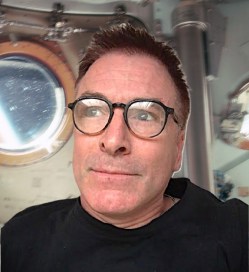
Spacesuits

I love Spacesuits: Here are three videos with general information and updates on the manufacturers of them – ILC Dover, Collins Aerospace, Dave Clarke, Oceaneering and SpaceX and their developments for the upcoming Artemis missions. There is vocabulary at the bottom.

The spacesuits used by NASA, today, are old and have been in need of replacement for over a decade–if not longer. Some of them have actually been a hazard, as they are 1970s’ technology. NASA and her contractors have been working on better suits for the ISS and a suit for the moon and Mars.

Watch these videos to learn about the hazards to be addressed, suit developments, testing, differences in floating-spacewalk- and surface- spacesuits, training and time-tables for production — as well as for information about the manufacturers.

The First video is from 2023 (Feb).

The Second video is a more basic tutorial in spacesuit requirements, limitations and human-factors issues & legacy concerns and designs.

The Third Video offers more opinionated information with lots of humor and behind-the scenes points of view from our friendly neighborhood space influencer, astronomer, physicist and pilot Scott Manley. You can find basics at the NASA website, here. (The “NASA” link is the general site link.)

Don’t forget to see the vocabulary list I compiled at bottom.
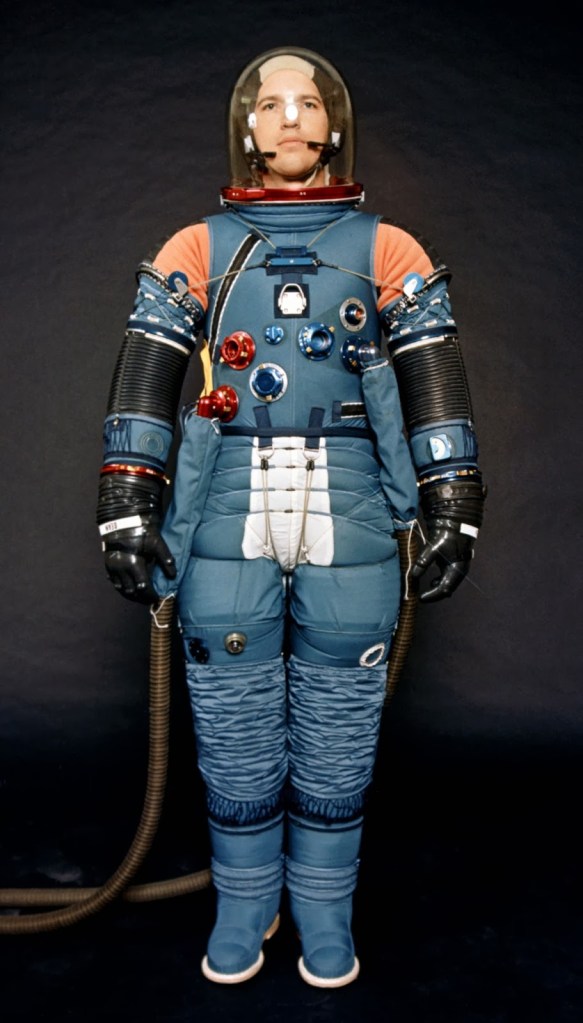
Pressure Portion of A7L Apollo Space Suit / Photo: NASA

Spacesuit Vocabulary

IVA – Intra-vehicular Activity – activity inside the spacecraft, referring to equipment/suit(s) intended to protect the astronaut from cabin pressure failure and/or parachuted descent in-atmosphere

EMU – Extravehicular Mobility Unit (spacesuit for space Station EVA – usually equipped with a SAFER

ACES – Ascent and Entry Suit (the “pumpkin” suit): spacesuit used for launch and reentry; and IVA suit.

MACES – a proposed spacesuit variation of the ACES intended for ascent, reentry and contingency and mid-duration contingency scenarios in space

EVA – Extra-vehicular Activity: work outside a spaceship (on a planetary body or in space)

EVA Suit – a spacesuit used for use outside a spacecraft, in space or on surface

SAFER – Simplified Unit for EVA Rescue – a “jet-pack”; all ISS astronauts are equipped during EVA, with this device, which is for use in emergency mobility for return to the airlock in the event of detachment from structure due to a disconnected tether and loss of tether or nominal proximity

PGF – Pressure Garment: the actual container portion of the suit that seals the astronaut off from the vacuum of outer space or harmful atmosphere of a planetary body, different from the coolant garment worn underneath it (suspiciously missing in Sandra Bullock’s spacesuit doffing scene in the movie Gravity)

PLSS Portable Life Support System: the machinery in the backpack running the spacesuit, providing respiratory filtration, breathable air, pressure to contain the constitution of the astronaut, drinking water and cooling system; term most used during the Apollo program

MAG – Maximum Absorbancy Garment: chemically treated diaper which whisks solid waste from the astronaut’s body, crystalizes it and draws it into a lower layer to protect the skin from toxic exposure; this is rarely used, if ever, as no one likes to defecate in his or suit–to the extent that a low residue diet is observed up to a day before EVA. (If you are daring, ask me about my having taken the NASA Space Poop Challenge in 2018–which doesn’t mean I pooped for NASA, but that I attempted to design a waste Management System for the MACES.

This list will grow as I have time to update it.
Invisible Finger Sketches & “Bad Words”

Stone Age And Rocket Age Records—Lost in Time (or 1s & 0s)

I saw a cartoon on a friends Facebook page, by Wiley, of Wiley Ink dot net. It depicted a Paleolithic cave-dweller beginning an inscription on a wall. By the likes of the image, he is using a primitive means of inscription (Duh!) —probably the ash of a spent fire-stoking branch. The caveman had only succeeded in creating one line, whereupon another stone-age dweller—his wife?—hands on her animal-skinned hips at the mouth of the cave exclaiming – “Woah, woah, woah! Stop right there, before you get any more offensive!“ Amused by the apparent over-sensitivity implied in this cartoon—obviously about our social media age and its regression into puritanically controlling speech-limitations, I had a “Eureka!” moment.

‘This is brilliant’, I thought—but for an interpretation my cortex likely read into the work—which maybe the cartoonist didn’t intend (or maybe he did):

Hardly anyone ever stops to think that the Internet is something that is not even seen in the real world (can you hear Lawrence Fishburn’s ominous and sarcastic voice from The Matrix?), thus the setting in the cartoon--a cave.

One needs an electronic device to see anything that’s written on the internet—drawn, created or stored there; I’ve thought about this many times:

All of the writing and digital artwork I have created on the internet is electronically generated and must be seen via a machine. If I don’t print my photos, drawings, photography and essays—my comments, maxims, petitions and books in progress!—print them out and store them somewhere–they could be—and likely will be—lost—were some disaster to befall our civilization (in which case, depending in the severity of the disaster (aren’t all disasters severe?)—it might not matter. Well—what about a partial disaster—say, with ISIS, the Taliban or Russia destroying the Internet?

In a thousand years, if our electrical systems and mainframes have not been destroyed—or even if they haven’t been—virtually no one (if we are still here) will know about the volumes of things that have been created and kept there—unless (and even then) their creators are famous—if they are not stored on memory devices compatible in some future world of tech—gone, forgotten… as good as never made—for that matter, unless they are so prophetic, ground-breaking or helpful that they wind up in museums or nuclear-war- and killer-asteroid- proof time capsules. Kids today don’t know how to “turn on a cassette tape”. Remember Zip drives? Floppy disks? ‘Neither do I.’

It’s almost like we’re tracing out invisible finger sketches—of math problems—in our pockets—lasting long enough to draw a sum.

Offended

And for people to get upset about what other people say in this near invisible medium—is likely something our descendants will laugh at—if they even know about it.

Moreover–even if I and all creators on the Internet were to print out everything they did on paper, bind them in books, magazines or manuscripts and save them, think about this: People read very few books, magazines, journals, periodicals or even letters any more—how many in their lives—in their lives? And most people read digital media. And many are out of fashion in a decade–forgotten. Have you ever been to a used book store? Oh yeah?—how long ago? It’s a grave yard one has trouble finding classics in—and I don’t mean the classics;I mean last year’s best sellers.

Imagine people seeking out the digital media of forgotten people and times, even thirty years ago!

Who is going to remember what Elon Musk or Donald Trump said, other than historians?—or a rapper who thinks he is good at design and philosophy. People argue over what Neil Armstrong said—even though people skilled in dialects and those who knew him know what he said—and he’s as famous as Jesus Christ—and Caesar! And he really did fly–a lot faster than the wind and better than most pilots. really did walk on the moon, which some people will die on a hill over–to say he didn’t.

‘What’s a pilot?…’—people will say in a hundred years, ‘one of those people who used to drive planes?’ So maybe we should lighten up about what is said by a famous so-and-so on social media–or a not-so-famous so-and-so. And definitely stop causing professors and comedians to lose their jobs over a joke no one will remember–especially because, we won’t find in 10 years—or know what it means in 30.

Read a book—and write a real one.

This can also be found on my website at My Site

Thank you for reading.
Carl Atteniese,

Tokyo

‘The’

What is ‘the’ and how should we use it? If you are an experienced English language student you know this, but you might not know naturally when to use ‘the’ in all cases.

I. ‘The” for Special And Specifically Known Things And People
“The’ defines things and people–so it is called the definite article”, giving us a definite awareness of which one we are concerned about. ‘The’ is used like other words which identify known things and people*–and to show that they are specific things or special things or people–and not mere concepts! Look:

‘Pencil’ is just a word naming a tool that uses graphite or lead to make marks.
‘A pencil’ is not a word; it’s “a real pencil”.
‘The pencil’ is one that the listener knows about, because it was spoken about earlier–or it is one that the listener could easily be made aware of as special.

Example Set 1.
the plane on the tarmac
the man over there
the table by the window
the girl I talked about earlier

Sample Conversation A:
Dave: Where’s the pencil I was using?
Marcus: It’ sunder the table. It fell down when you sneezed.


Note:
Dave shouldn’t simply say ‘a pencil’. because that would make ‘his pencil’ an unspecified pencil. Similarly, he shouldn’t say merely ‘pencil’ with no modifying word (like ‘the’) in front of it, because that would mean the concept of ‘pencil’, not an actual pencil.

II. ‘The’ for General Things, Concepts & Titles of Entities or People
We use ‘the’ to identity known devices, positions, locations people and entities — because there is one of them, only one of them nearby or because they are singularly special:

Example Set 2.
The Theory of Relativity (There is only 1.)
the automobile (Not 1 auto, not all autos, the auto in general as a thing in the world)
the pencil (Not 1 pencil, not all pencils, the pencil in general as a thing in the world)
the copy machine (in the room or office or in the room or office talked about)
the president
(or ‘President Obama’, [No ‘the’ with a name, unless referring to one of two or more people with the same name; ask me about this in class.])
the right side of the building
(concerning the side of the building being discussed)
the city, the park, the front yard
(nearby or near the location being talked about)
the police station, the train station, the government
(nearby or in the area spoken about)

Sample Conversation B:
Marcus: Did you know ‘the pencil’ refers to the device that changed writing and drawing, just as the Theory of Relativity changed physics and other areas of science?
Dave: Sure, it’s like the automobile, airplane and computer which changed transportation and computing in the time of horse & carriage. Before the pencil, was invented, people wrote and drew by dipping a quill, or a plucked feather, into ink. I mean of course we —
Marcus: The computer wasn’t invented in the time of horse and buggy!
Mando: Actually, if you don’t mind my saying—there were mechanical computers in the 1700s–running on levers, rods and punch cards….
Dave: That’s ridiculous. Where do you learn this crap?
Mando: They hide this information from you, Dave, in a thing called books--and on the internet–where they know you won’t find it.
Marcus: Haa Haaaaa! Nice one!

There is more to know about ‘the’ and when to use it–as well as when not to use it; you can ask me about that in class; or just master these ideas, first–as they are the important basics; when the exceptions arise, that makes for a great learning moment. As you may have noticed, because of that truth of more effective memory in question-and-answer learning, and because it allows for incremental learning in stead of voluminous learning, which I think it bores a student and bogs down the mind), I prefer to teach concepts on a “need-to-know” basis. So–basics first, exceptions later.

Thank you for reading.

Copyright Carl Atteniese 2022 / All rights reserved.
_____________________________________________________
*To this writer, “animals” are people–who have a conscious experience, are separate from and interact with other conscious beings and so feel pain, happiness, fear and affection. If this were not true, people would not have pets.

Bolt The Door…

This poem can be heard here.

Bolt The Door
On once dark ages
Which in sinister drafts do pry

Robed, they poise to rend our light
Having loosed the hinge on rages
Their inked claws our laws rewrite…

Copyright 2011 ~ 2024 Carl Atteniese II/All rights reserved


Voice Acting 声優

[せいゆ]

Voice Actor CarlSoundcloud

NARRATION & VOICE ACTING

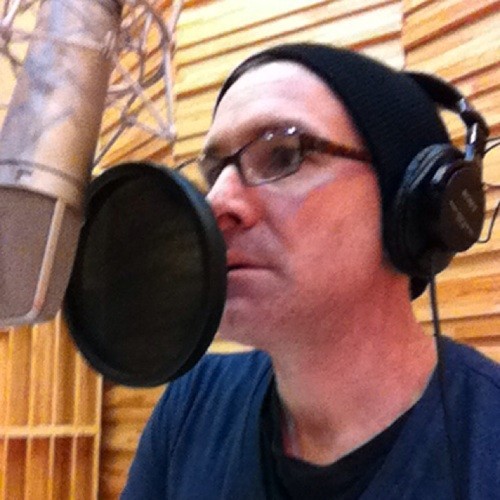
Carl Atteniese Jr: Image 4In Korea, Carl narrated ten documentaries for Arirang TV (the Korean National Broadcasting Federation).

He voice-acted for TBN-CJ/E&M Entertainment, Android, Samsung, Human EdPirate Carl, by Human Corporation Video Directorucation and other companies.

A musician friend of his says Carl might have near-perfect pitch, which is a boon to voice acting in that it makes it so much easier to replicate tones, registers and even personalities.

Carl has used his knowledge as an English teacher for proof-reading, editing and writing, to assist clients with their script production.

Request a Wav or MP3 file.

Commercial Samples (Full Recordings):


Natural Voice Samples (unedited, but with professional quality):
Educational Actor

Carlosity  

Stand Up

AI
Save Lives. Join Amnesty International.

Text Books 教科書

Text books are good for people who have nothing passionate to discuss in class–or for guidance and basic learning. I suggest you read novels or narratives about a subject you love. 教科書は、クラスで議論することに情熱を傾けていない人や、指導や基本的な学習に適しています。私はあなたが愛する主題についての小説や物語を読むことをお勧めします。

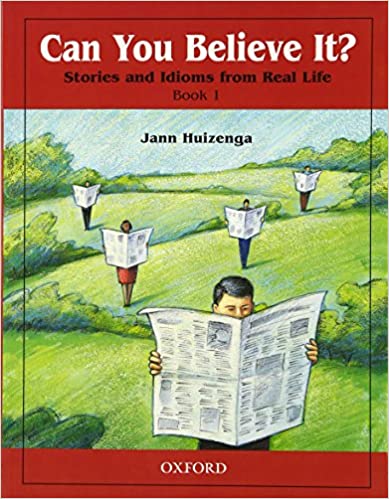
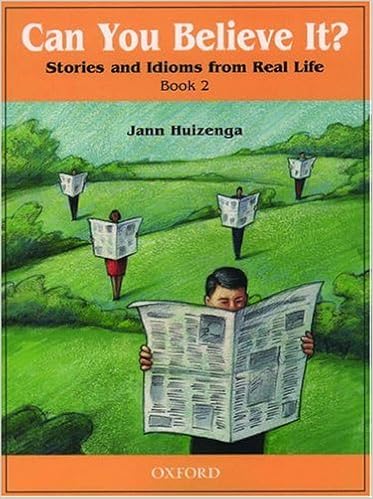
If you’re not going to take my advice and read a novel or narrative in the first-person about a subject you love–these books are my favorites for building fluency, idiom and expression use every day speech among all levels of students. They are classics, and I have used them for years in different countries. There are others, so if you need a book and do not like them, I can recommend others. You can make recommendations, too. I generally don’t like what I call fashion books, like Headway, Streamline–conversation books that look like travel brochures or pilot’s handbooks; they are always changing the subject–which you can do in the matter of natural conversation in the context of your interest. They are good for a crash course in all kinds of shallow situations, though. On the bottom is a classic Grammar series called Side by Side.あなたが私のアドバイスを受けて、あなたが愛する主題についての一人称で小説や物語を読むつもりがないなら – これらの本は流暢さ、イディオム、表現を構築するための私のお気に入りです学生のあらゆるレベルの間で毎日のスピーチを使用します。彼らは古典であり、私はさまざまな国で何年もそれらを使用してきました。他にもあるので、本が必要で気に入らない場合は、他の人をお勧めします。あなたも推薦をすることができます。私は一般的に、Headway、Streamlineのようなファッションブックと呼ばれるもの、つまり旅行パンフレットやパイロットのハンドブックのように見える会話の本が好きではありません。彼らは常に主題を変えています – あなたの興味の文脈で自然な会話の問題であなたがすることができます。しかし、あらゆる種類の浅い状況でのクラッシュコースに適しています。一番下には、サイドバイサイドと呼ばれる古典的な文法シリーズがあります。


These are books we use in class–(if you want to use them). They are great. We can use PDFs of these books. I have used them for years, and all my students of all ages have enjoyed them. They contain many very short stories, which are easy to read and packed with expressions you need to know as a would-be native speaker. They also include several pages of exercises after each story.

これらは私たちがクラスで使用する本です—(あなたがそれらを使いたいなら)。彼らは素晴らしいです。これらの書籍のPDFを使用できます。私は何年もそれらを使用してきました、そして、すべての年齢のすべての私の生徒はそれらを楽しんでいます。彼らは多くの非常に短い物語を含み、読みやすく、ネイティブスピーカーとして知っておくべき表現が満載です。また、各ストーリーの後に数ページの演習も含まれています。
Conversations, Idioms, Expressions, Simple Stories, Lots of exercises, Storyboards / 会話、イディオム、表現、シンプルなストーリー、たくさんの練習問題、ストーリーボード

Side by Side is a lesson book with multiple repetition exercise modules for comprehensive grammar retention and practice through conversation in every day situations. It’s excellent, whimsical and popular worldwide. It is published in level volumes 1 to 12.
Side by Sideは、毎日の状況で会話を通して包括的な文法保持と練習のための複数の繰り返し演習モジュールを備えたレッスンブックです。それは素晴らしく、気まぐれで、世界中で人気があります。それはレベル1から12までで出版されています。

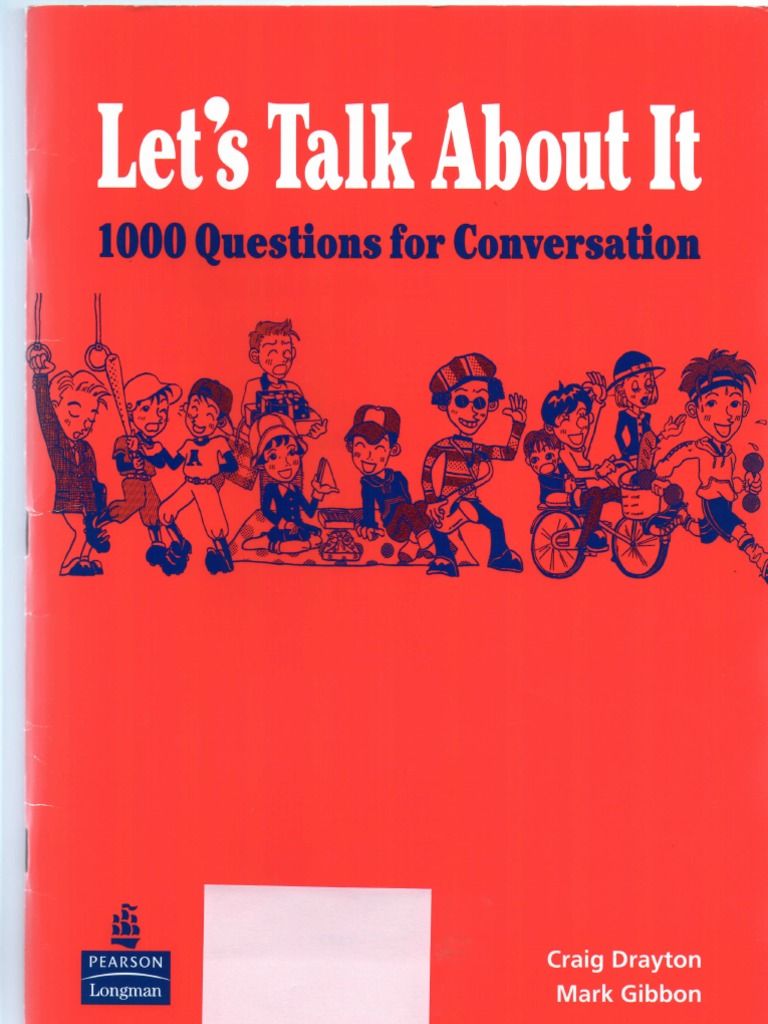
Let’s talk About It: Conversation Topics with Statement-to-Question & Question-to-Statement Conversion exercises & and comprehension checks. This book is popular in Japan. I used it at English Village, Gotanda and Shinjuku. それについて話しましょう:ステートメントから質問への会話トピックと質問からステートメントへの変換演習と理解度チェック。 この本は日本で人気があります。 イングリッシュヴィレッジ、五反田、新宿で使ってみました
This book is a great conversation starter. It was written with Japanese native speakers in mind. It’s a bit odd, in some ways–for that reason, meaning it displays a few Japlish words & signage, but because it features Japanese culture, it may make some students comfortable. この本は素晴らしい会話のきっかけです。 日本語のネイティブスピーカーを念頭に置いて書かれました。 いくつかの点で少し奇妙です。そのため、いくつかのJaplishの単語と看板が表示されますが、日本文化が特徴であるため、一部の学生は快適になる可能性があります。

The Right Words

Only the right words convey the truth.

I think a lot about words. I didn’t set out to do this; it happened over the years; I’ve written poems since I was a boy. As I wrote about different subjects and in different styles, words became more and more important to me. From my reading, listening to podcasts and conversations—and through the exploration of English and other languages, I learned more about words: how they form and how they are used in different cultures—how our minds use words to build organized and complex thoughts. In the last few years, wherein speech is under radical changes due to social forces, more than in regard to poetry, I realized the right words are essential to preserving and conveying meaning and intention, from ideas to dreams to realizations.

But all of this isn’t new. I found when I was young, that sometimes even people speaking the same language have trouble understanding one another—and so I ‘translated’ for them. I also seem to possess these capacities in relation to ideas in general—seeing to the heart of a matter when others around me don’t seem to; is it y imagination? It works. This has changed the orientation of my thinking and writing somewhat—from poet, if I may say that—to philosophizer.

I would be honored were you to read some of my ideas and decide if you agree or disagree. And please share your ideas with me, if you have the time.

Thank you for reading.

Carl Atteniese,
Tokyo

Copyright 著作権

This work, at https://xesl.wordpress.com, and http://aaclass.jp is licensed under a Creative Commons Attribution-NonCommercial-NoDerivatives 4.0 International License.

この作品は、http://xesl.wordpress.com、およびhttp://aaclass.jpで、Creative Commons Attribution-NonCommercial-NoDerivatives 4.0 InternationalLicenseの下でライセンスされています。

이 작업은 https://xesl.wordpress.comhttp://aaclass.jp에서 Creative Commons Attribution-NonCommercial-NoDerivatives 4.0 International License에 따라 사용이 허가되었습니다.

此作品位于https://xesl.wordpress.com和http://aaclass.jp,已获得知识共享署名-非商业性-无衍生品4.0国际许可的许可。