
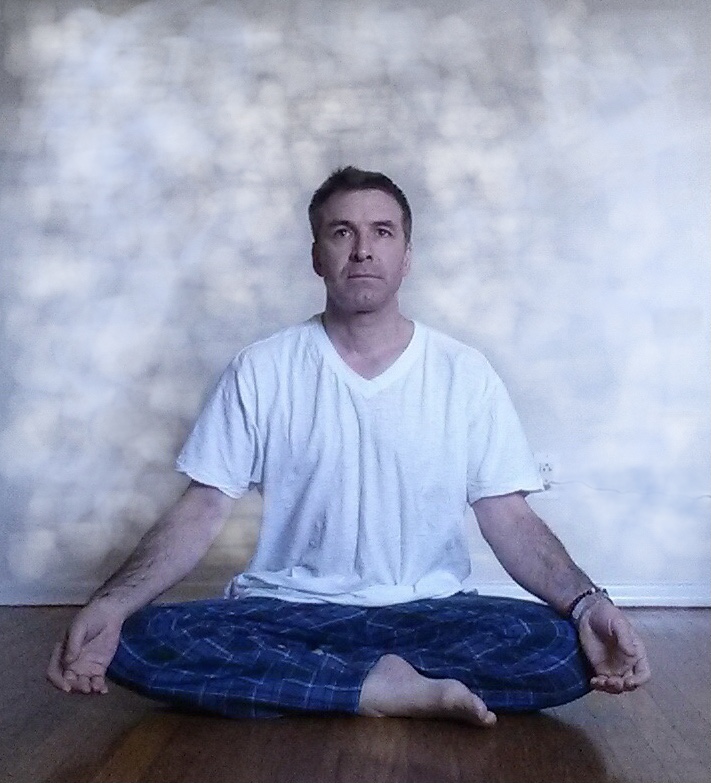
The best places he has meditated were at Han Maum Seonwon, Hwa Gye Sa and a mountain temple in Choonchun–al in Korea–as well as at a Zazen temple in Hibarigaoka, Japan. / photo: I / © Copyright Carl Atteniese II / All rights reserved.
How And Why We Do It: An Essay in Parts
My Friend,
There are different forms of meditation and different methods via which to achieve its benefits.
In my opinion, the most useful form of meditation is vipassana. I think this way, because from what I understand about it, it is not goal-oriented—at least in the Zen sense:
What I mean by non-goal-oriented is, it is not like lifting weights or taking a business seminar.

“We sit to sit.”
– Suzuki Roshi.
Of course, when we approach meditation, more or less we are doing it, because we think it is good for us; some of us for a greater sense of peace, for improved health, for better focus–but if we really understand meditation, spiritual, meditation, we don’t do it expecting anything–or at least we shouldn’t, because it is really a practice, in its true and purest form, of simply being; and it is a practice of allowing ourselves to “be”. This is how we learn ourselves–the most important activity we can engage in. In this way meditation helps us reach better understanding and that is what may lead to peace and focus and better health.

So–meditation is a strange thing; people also sit to attain greater wisdom, as have millions of spiritual seekers, but we have to have the wisdom to know what meditation can do for us before we begin–to some extent; therein lies the conundrum–doesn’t it, my friend?
If you accept that, then… despite it’s not being goal-oriented, it yields many benefits. And as a non-goal oriented form of meditation, it can create little to no anxiety–unless you are one who is prone to discomfort by quiet and introspection; yes, there are people who grow anxious if they sit in solitude. If you are one of these people, you may not be ready for meditation of this type.
Vipassana is meditation in which we do not try to think. Of course we will experience the passing of ideas, visions and stimulus, but we do not engage these manifestations of our consciousness–or try not to. This is useful for a host of reasons–one of which is the afforded opportunity to observe our mind, as if it were separate from us in the first place: it’s not. You don’t have a mind; you are your mind.
Observing our mind allows us to become acquainted with how we think, what we think of and the quality and nature of our thoughts. This could be considered the best ways to honor Plato’s “know thyself.” It’s helpful to know yourself. It is different from professing whom you are. We often see ourselves in ways that do not reflect the truth–certainly not to others, who can only see us from the outside. This is helpful–and dangerous. We often are misunderstood–especially when out of our element. We can also behave outside the range we would often expect ourselves to when in familiar surroundings–but now in different surroundings, we find ourselves reacting–and in undesirable ways. This is what happens when we experience culture shock. Culture shock can happen in your own country, in your own province or state; it can happen when meeting people who behave vastly differently from what we are used to. So, at home or abroad, among friends or strangers–the better we know ourselves–and indeed, the better we cultivate our mind–the more we may present an even demeanor–even when in strange situations that shock, confuse or irritate us. This can be achieved with meditation–by knowing yourself, and knowing what kind of self you want to be.
To be continued….
Until then, peace love and joy to you and yours. How? “Peace is every step.” – Thich Nhat Hanh
Carl Atteniese,
New York
© Copyright Carl Atteniese II / All rights reserved.
